The psychology of cleaning is all about how clearing and organising your space can impact your mental wellbeing. Good cleaning health means being in clutter-free, fresh, and hygienic spaces where people feel freer, less distracted, and more focused. By paying attention to the benefits of a clean office on both mental and physical wellbeing, office managers can create a more productive, effective and healthy workforce. From better staff retention to fewer instances of sickness, investing in a clean, organised workplace can have a powerful psychological impact.
Cleaning Health: The Psychological Impact of Cleanliness in the Workplace
The Link Between Cleanliness and Mental Wellbeing
Research shows that cleanliness can reduce stress and anxiety. This may not come as a huge surprise. We’ve all found ourselves getting stressed when our house is a mess, or so full of clutter that we can’t find what we are looking for – the same goes for the workplace. A disorganised, cluttered workspace isn’t just bad for business; it can negatively impact levels of stress and anxiety among employees. It’s even less of a surprise that stress and productivity are not a good match.
The psychological principle of Cognitive Load Theory supports this. Cognitive Load Theory (CLT), developed by educational psychologist John Sweller, explains how our brains process and store information. The principle suggests that people have a limited capacity to remember. When they are bombarded with information or trying to operate in a highly distracting environment, this negatively affects cognitive ability.
In the context of the workplace, a cluttered or dirty office environment can contribute to excessive cognitive load, making it harder for employees to focus, process tasks efficiently, and retain information. One study conducted by UCLA found that visual clutter competes for attention. Hence, spaces packed with physical objects make it difficult to concentrate and lead to increased stress and reduced productivity. By maintaining a clean, organised workspace, businesses maintain good cleaning health and can help employees minimise distractions, enhance mental clarity, and optimise cognitive function, ultimately improving performance and workplace wellbeing.
Cleaning Health and Employee Productivity
Motivating your employees to be as efficient and productive as possible is going to be a priority – the success of the business depends on it. While directors, managers and team leaders may have many strategies in place to achieve this, keeping the workplace clean and hygienic is one of the easiest ways to help keep employees focused on the task at hand. A study in the Harvard Business Review found that cluttered workspaces reduce efficiency and increase frustration. Physical distractions can hinder focus and slow down workflow – this can be anything from stacks of unfiled papers to dirty washrooms or kitchen areas with dirty dishes in the sink.
Clear desk policies are commonplace in offices to help keep workplaces organised. A Clean Desk Policy (CDP) is a workplace guideline that encourages employees to keep their desks tidy, organised, and free from unnecessary clutter at the end of each workday. This policy is often implemented to improve security, efficiency, and hygiene in office environments. A clean desk policy helps businesses reduce data breaches, prevent information leaks, and maintain compliance with GDPR and other regulations by ensuring that sensitive documents, notes, and personal items are properly stored.
Many organisations choose to incorporate clear desk policies into their ESG (Environmental, Social, and Governance) strategies by encouraging employees to go paperless. Going paperless might include sending documents around via email instead of printing them out and keeping documents saved online rather than in physical folders. Reducing waste and encouraging digital storage solutions is better for the environment and makes it easy for important or confidential documents to stay in the right place with the right access. To enforce a clean desk policy effectively, businesses can provide storage solutions, clear guidelines, and regular reminders, ensuring that employees maintain a functional and professional workspace.
Clean Workspaces and Job Satisfaction
The psychology of cleaning affects not only how productive employees are but also how they view coming to work and their level of job satisfaction. A clean work environment makes employees feel valued. Research conducted by Tork suggests that a massive 86% of employees regard office cleanliness as the most important aspect of a good work environment. While it can be difficult to stay on top of daily cleaning tasks, doing so can help with employee satisfaction and staff retention. That’s why many businesses hire an office cleaning company to tackle those important cleaning jobs, meaning employees can get on with their work in an environment that makes them feel appreciated.
The Connection Between Cleanliness and Physical Health
Clean Offices Reduce Sickness Absences
Clean offices also have an impact on the physical health of your team. Offices that aren’t cleaned regularly can quickly become a breeding ground for germs and bacteria. With desks, kitchens, washrooms and communal areas seeing lots of different people come and go throughout the day, as well as phones and door handles being particular hotspots, illness-causing germs can pass from person to person and cause disease to spread. The impact of proper sanitisation on reducing seasonal flu and infections is massive. Regular office cleans that pay particular attention to problem areas can help to ensure your workforce stays healthy, thus reducing the number of sick days taken throughout the year.
The Role of Indoor Air Quality (IAQ) in Employee Health
Poor air quality leads to fatigue, headaches, and respiratory issues. The EPA (Environmental Protection Agency) found indoor air can be 2-5x more polluted than outdoor air. Because of this, to ensure good hygiene standards, it’s a smart idea to focus on maintaining good air filtration, regular dust removal, and professional carpet cleaning.
The Psychological Effects of Poor Hygiene at Work
Employees notice dirty spaces – and this has an impact on motivation and morale. In fact, some evidence suggests that spending time in places that are visibly dirty can be linked to depression. The Broken Windows Theory is a psychological and criminological concept developed by James Q. Wilson and George L. Kelling in 1982. It suggests that visible signs of disorder, neglect, and minor infractions in an environment(such as broken windows, graffiti, or litter) can encourage further deterioration and even escalate into more significant problems. The theory is based on the idea that when people see an environment in disarray, they perceive it as unmonitored, unvalued, and more permissive of negative behaviour.
How It Relates to the Workplace
In an office setting, a messy, unclean, or neglected workspace can have similar psychological effects. If employees see overflowing bins, dusty desks, or cluttered communal areas, they may feel less motivated to maintain cleanliness themselves. Over time, this can lead to a decline in overall office hygiene standards, reduced employee pride in their workspace, and even a negative impact on morale, productivity, and professionalism.
Conversely, good cleaning health such as maintaining a clean, well-organised office signals that the workplace is valued and cared for, reinforcing a culture of respect, discipline, and accountability. Regular professional cleaning helps prevent this “broken windows effect” by ensuring that small cleanliness issues don’t spiral into a larger culture of neglect, which can affect employee satisfaction and even client perceptions of the business.
How a Clean Office Influences Employee & Client Retention
The Impact on First Impressions and Client Perception
We’ve already discussed how a well-maintained office can make your employees feel, but it can also have an impact on your wider business too. Keeping your office clean signals professionalism, care and high standards. So if you have clients or customers coming into your place of work, you are more likely to win their business. A clean office impresses clients and visitors alike and builds trust in your brand.
The ISSA (International Sanitary Supply Association) found that 94% of customers would avoid a business with poor hygiene. So investing in the cleanliness of your business is well worth it.
Cleanliness as a Reflection of Company Culture
While employees are more likely to stay with companies that invest in their comfort, a clean office can also help attract the best talent too. The psychological theory: “Maslow’s Hierarchy of Needs” demonstrates that people need certain basic needs met, before they can move on to fulfilling other needs and desires.
The five levels are:
- Physiological Needs – These are basic survival needs such as food, water, air, sleep, and shelter.
- Safety Needs – This includes physical and psychological security, financial stability, health, and a safe environment.
- Love and Belonging – Social needs, such as friendship, relationships, and workplace camaraderie.
- Esteem Needs – Recognition, self-respect, confidence, and a sense of achievement.
- Self-Actualisation – The highest level, where individuals seek personal growth, fulfilment, and reaching their full potential.
How It Applies to the Workplace and Office Cleaning
A clean, organised, and hygienic office environment plays a crucial role in meeting several levels of Maslow’s hierarchy:
- Physiological Needs: Proper office cleaning ensures good air quality, hygienic surfaces, and a healthy workplace, reducing illness and absenteeism.
- Safety Needs: A clean office minimises health hazards, prevents the spread of germs, and ensures compliance with health and safety regulations.
- Love and Belonging: A well-maintained, welcoming workplace fosters team collaboration, social interaction, and a sense of belonging.
- Esteem Needs: Employees feel valued and respected when they work in a clean, professional environment, boosting morale and motivation.
- Self-Actualisation: A well-maintained workspace enhances productivity and creativity, allowing employees to focus on their work and career goals.
By investing in professional office cleaning services, businesses help employees feel safe, comfortable, and motivated, supporting their overall wellbeing, retention, and performance.
The Downside of Relying on Employees for Office Cleaning
The psychology of cleaning clearly demonstrates that keeping a workplace clean and hygienic can have many benefits for the business and its employees. However, trying to handle all cleaning tasks within the team can become difficult. For a start, unless you are a cleaning company, you didn’t hire your team to clean, and asking them to do so could waste time that could be better spent helping your business grow.
Office employees may also not consider cleaning the workplace part of their role and could resent being asked to do so. Dishing out cleaning duties or asking employees to be responsible for office cleanliness could create unnecessary conflict amongst team members too. Employees may also feel as though they are being undervalued by the business if they are asked to clean on top of their regular responsibilities.
Inconsistent and Inadequate Cleaning
While employees should be perfectly capable of keeping desks tidy and washing up coffee cups, when it comes to sanitisation and deep cleaning, employees lack proper training.
Important areas such as keyboards, door handles, and shared kitchens often get neglected, increasing infection risks. Even places that are cleaned are done so inadequately, which means that even if your office looks clean and tidy on a surface level, it might not be adequate to stop infections from spreading and affecting the health of your workforce.
Why Hiring a Professional Office Cleaning Company is the Best Solution
Expertise and High Standards
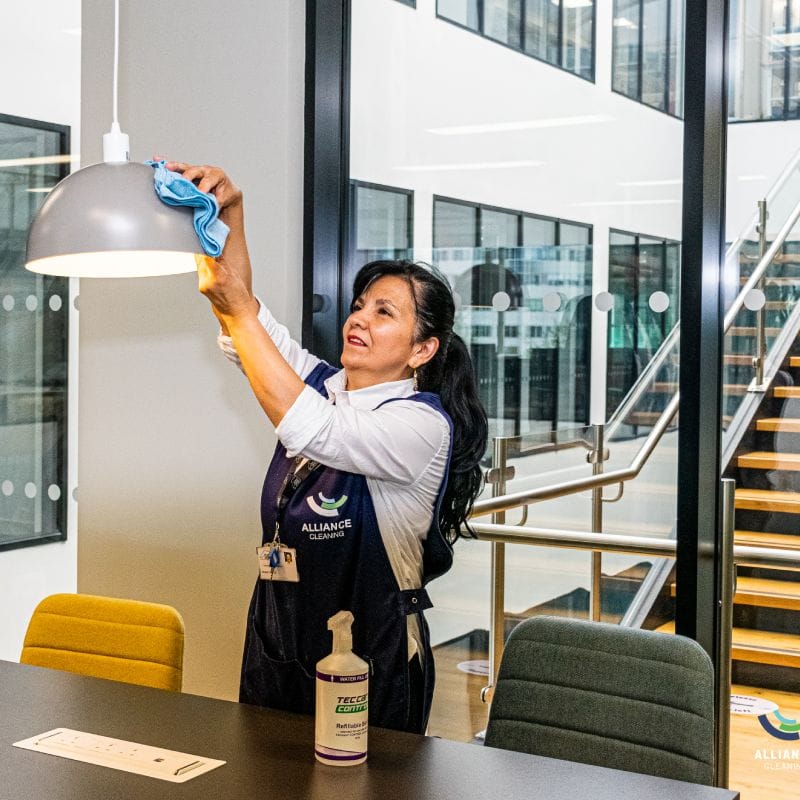
Professional cleaners are trained to handle bacteria hotspots, air quality control, and deep cleaning. They have the training and the tools and specialist equipment required to tackle germs and bacteria that aren’t necessarily visible on surfaces. A professional cleaner can also ensure that all cleaning products are used correctly and won’t damage the surfaces or fabrics they are used on without compromising the depth of the clean.
Time and Cost Efficiency
A cleaning company ensures consistent maintenance without affecting employee productivity. There are also long-term cost benefits, including fewer sick days, better retention, and a more professional environment.
Customised Cleaning Plans
A professional cleaning company can also work with your business to ensure that cleaning health remains high, creating a tailored plan that is unique to the size of the business, number of employees and any specialised services required. They can also offer bespoke cleaning schedules that include daily cleaning as well as deep cleaning, eco-friendly cleaning, and high-touch area sanitisation.
Conclusion: The Psychological and Practical Case for Professional Office Cleaning
It is clear that there are many psychological and health benefits of a clean workplace. Hiring a professional cleaning service can be an investment in employee wellbeing, productivity, and business success. If you are considering hiring a professional cleaning company to ensure your office maintains excellent cleaning health, contact the experienced, friendly team at Alliance Cleaning today. We can discuss your needs and provide you with a no-obligation quote.